70,000 Tons of Metal 2026

In January 2026, my dad and I embarked on the ocean on 70,000 Tons of Metal for the first time. The international metal cruise boasts 60+ bands.

Here is a brief recap of our experience. All still images were taken by my dad, Tom. All video was taken by me. You can see the rest of my videos (short clips) on this YouTube playlist.

Much to my emotional overwhelm, my favorite band, Seven Spires, who was the reason why I wanted to go on the cruise in the first place, was playing the first set of the cruise. We got to the Star Lounge 45 minutes early, and there were already rows of people standing in front of the stage, watching the Boston symphonic metal quartet’s soundcheck. By the time their actual set started, with the chanted “Wanderer’s Prayer” leading into the blistering “Gods of Debauchery,” the lounge was full of people. The audience sang happy birthday to lead singer Adrienne Cowan, whose birthday was the day before. The lounge cheered and sang along for an emotionally potent first show of the cruise.

Later in the boat’s main theater, we watched Soen. Formed by ex-Opeth drummer Martin Lopez, the progressive metal band had just released their newest album, Reliance. An enthusiastic crowd swayed and sang along to ballads and heavier songs alike. In our row of seats, two gentlemen who chatted politely and quietly to each other before the set sang in full, passionate voice and vibrato along with “Antagonist.” Meanwhile, onstage, the three-part vocal harmony of lead singer Joel Ekelöf and the two guitarists Lars Åhlund and Cody Lee Ford blended smoothly.

Soen singer Joel Ekelöf rests an arm on the shoulder of guitarist Cody Lee Ford.

Next, we stopped back in to the Star Lounge just in time to see Irish thrash band Gama Bomb’s yeti mascot start a circle pit while singer Philly Byrne climbed across the venue’s furniture singing “Speed Funeral.” This inspired us to check out their second set on the last day of the cruise, an unofficial “costume” day. We watched people circle pit around someone in an inflatable Mothman costume, which seemed oddly fitting as Gama Bomb blasted through songs like “666teen” and “We Respect You.”

We returned to the theater to see Kamelot. On a personal level, my dad and I were meant to see Kamelot, Ad Infinitum, and Hammerfall in Atlanta, GA, in 2024, but I had gotten sick and he went by himself. This felt like a second chance. The volume of the amps made the bass thump in my chest. The full crowd enthusiastically responded to a set of favorites like “Insomnia” and “March of Mephisto.” Bombastic stage presence by bassist Sean Tibbetts and vocal support by Melissa Bonny (Ad Infinitum) helped reach every corner of the packed theater.

On January 30, the ship was in port at Nassau. We did not have any excursions planned, though, and spent the day exploring the ship as we waited for concerts to begin again.

After people returned to the ship from the Bahamas, we caught German band Orden Ogan on the pool deck stage under light rain. Lead singer Sebastian “Seeb” Levermann was unable to travel to the cruise because of a recent injury, so vocalist Marc Lopes (Let Us Prey, Ross the Boss) stepped in instead. (He had previously collaborated with Orden Ogan on the song “Hollow.”) He said their soundcheck, less than an hour before, was his rehearsal, but you wouldn’t have known it. The band sounded great and brought high energy even as the weather took a turn for the worse.

Then, we saw Swiss band Ad Infinitum in the theater. They mostly played songs from their most recent album, 2024’s Abyss. The combination of danceable hooks and heavy breakdowns was engaging, and Adrian Thessenvitz’s jazzy guitar solos added extra layers of intrigue to their blend of genres.

Flashing lights warning.

On the ice rink stage, Ukranian melodic death metal act Ignea performed. Lead singer Helle Bohdanova commented that it was their first overseas as well as on-the-seas show. The band has been documenting the war while they are recording their new album in Kyiv. Enthusiastic audience members yelled support to them in Ukranian. Keytarist and main songwriter Yevhenii Zhytniuk played engaging keytar melodies as the band blasted heavy riffs. I heard many people on the ship share how excited and grateful they were to be able to see them live.

We were going to see Finnish act Beast in Black on the pool deck, but as sheets of rain poured diagonally in the wind across the stage, it became clear the set wouldn’t happen. It ended up being rescheduled to the early hours of the morning. in the theater, but thankfully they would be performing again the next day.

January 31 began at 10 AM with German melodic death metal band Hiraes (pronounced like “high rez”). Lead singer Britta Görtz brought high energy to the pool deck. She said at the first 70k cruise in 2011 (with her previous band, Cripper), she was one of very few female musicians across all stages, but this year, there were more than she could count, and that she is lucky to count many as her friends. She thanked the crowd for supporting new female artists and everyone in between before Hiraes launched into “We Owe No One.” The band was smiling as as much as anyone watching from the pool deck, especially as Görtz went into the crowd and sang by the hot tub to cheering bathers to close out Hireas’ set with “Undercurrent.”

From here, I split up with my dad to attend Fabienne Erni (Illumishade/Eluveitie)’s preview of her first solo album, Starveil, which comes out in March. After playing short clips from the album and explaining some of the background behind them (including one in a fantasy language and another that featured a hammered dulcimer), she played a short acoustic set on a piano, performing one song each from Eluveitie, Illumishade, and her solo album. Finally, fans lined up for a signing by Eluveitie and Illumishade, with Erni sitting in between both bands to sign and take photos.

We went to see Beast in Black in the theater. The band combines classic heavy metal with 1980s-style dance-pop. Sadly, main songwriter Anton Kabanen had gotten sick before the cruise and could not attend, but the energy was still electric as fans danced with glowsticks and tossed light-up inflatables into the air. Singer Yannis Papadopoulos had played Magic the Gathering on the ship at an event earlier that day, but he commented that Yu-Gi-Oh was his first love. When Papadopoulos asked how many of the crowd had been at their rescheduled show early that morning, a significant number of people in the pit cheered. The audience sang, danced, and crowdsurfed to songs like “Cry Out for a Hero.”

Flashing lights warning.

As the weather turned for the worse (my hometown in North Carolina was being hit with 10 inches of snow), thrash legends Anthrax took the pool stage as the sun went down. Freezing cold wind didn’t deter a small group of gentlemen from starting a circle pit in the hot tub. Singer Joey Belladonna ran and jumped across the stage as people riding inflatable capybaras marched across the deck. On a personal note, the second song Anthrax played was their classic cover of Joe Jackson’s “Got the Time,” which my dad had burned onto a CD for me when I was in elementary school. It felt full circle to stand next to him and pump my fist, shouting in sync, “One, two, three, go!”

Friday, February 1, was the last full day on the boat before we returned to Miami. I missed the belly flop contest at the pool to attend a workshop: Lea-Sophie Fischer (Eluveitie)’s violin and hurdy-gurdy clinic. She explained that she has two different violins for live shows. One is tuned a half-step down because, she said, she learned rock guitarists and vocalists aren’t very particular about key. She also demonstrated the electric hurdy-gurdy she plays live.

That afternoon was an all-star jam, in which musicians from different bands on the boat covered classic songs. I loved seeing Lea-Sophie Fischer play the main guitar riff of Children of Bodom’s “In Your Face” on violin. Kim “Kylla” Dylla performed vocals as tribute to her late friend, Children of Bodom singer and founder Alexi Laiho.

Flashing lights warning.

Unfortunately, there were too many things on the boat for me to be in two places at once, and I left the all-star jam early to attend Britta Görtz’s extreme vocals workshop. She has an excellent ability to get into the nitty-gritty specifics of vocal technique but also help everyone understand how to listen to how their voice sounds in their own body. She is positive, funny, and encouraging and an excellent teacher. I highly recommend watching her interviews in which she talks about technique. I knew that I would probably never be able to attend a workshop with her in person ever again, so I was honored and inspired to learn from her.

The last show of the cruise I saw was Swiss band Eluveitie (pronounced “ell-vay-tee”), which combines Celtic folk music with melodic death metal. The musicians onstage played not only guitars, bass, and drums, but also harp, violin, hurdy-gurdy, bagpipe, and what I think was a tin whistle. It was so cold on the pool deck that my toes went numb (frontman and founder Chrigel Glanzmann called the audience “warriors” for their enthusiastic attendance even in the winter weather), but the energy was high. I jumped and clapped by the right corner of the stage with other folks as Fabienne Erni smiled and pointed in our direction. The high energy and audience interaction was mixed with beautiful and emotional melodies. “A Rose for Epona” nearly brought me to tears.

Being in that crowd encompassed the culmination of uninhibited joy that the week brought me. Thank you to everyone who made it possible. I hope we can do it all again next year.

70,000 Tons of Metal 2026

The Cost of Mental Health Treatment

I originally posted this on Facebook on October 9, 2021. I edited it slightly to update it for May 2022.

May is Mental Health Awareness Month. I wanted to talk about something that’s been on my mind a lot: the cost of mental healthcare.

For UnitedHealthcare’s high-deductible plans through employers, the cost of an hour-long in-network therapy session is $104.11 ($161 before insurance). Maybe you see a therapist monthly and they suggest that you should get a psychological evaluation for a diagnosis that could help you receive more specific and helpful care. Psych evals are not covered by UnitedHealthcare. This costs you $1,361. The psychologist suggests you see a psychiatrist for medication management. The intake session with the in-network psychiatrist costs $135.58 ($200 without insurance), and while you’re trying new medications, not all of which help, you have follow-up sessions every 2 weeks, which take 5-10 minutes and cost $65.87 ($125 without insurance). The medications cost $20 for a month’s supply.

If you’re going to weekly therapy sessions and biweekly psychiatrist check-ins while taking medication, this adds up to $568.18 a month before meeting your deductible. The UnitedHealthcare deductible is $4,000 and would take over 7 months to reach. Maybe you had to switch over to this insurance midway through the year, though, because you turned 26 and had to leave your parents’ insurance plan or because your employer changed to a new insurance. Then, you’d have less time to meet the deductible before it reset in the new year and you’d have to start all over.

Now, your employer also offers a Health Savings Account. They give you $175 a year to spend on healthcare through a debit card, but there’s a $1 monthly maintenance fee. That’s about $13.50 a month, cutting your monthly bill down to $554.68.

Let’s say you had all these bills as an entry-level hire in the publishing industry, the industry in which I work. Your annual salary might be $30,000 before taxes. After federal, state, and local taxes, as a single person in NC, it might be $23,856 (per https://smartasset.com/taxes/north-carolina-paycheck-calculator, accessed October 2021). That’s about $1,988 a month. That’s not taking into account the cost of your health insurance, but let’s say it’s $20 a month. Now you have $1,968.

I live in Cary, NC. Based on the prices where I live, if your rent was $1,000 a month, Internet was $35, utilities were $40, power was $65, gas was $75, and groceries were $200, and hey, let’s assume you’re still on your parents’ phone plan and share a Netflix login with someone, you’d be left over with $558.

After paying your mental healthcare bills, you’d have $3.32 from your salaried job. But you’d have to pay taxes, car insurance and maintenance, and property insurance.

So, you can’t afford it. That’s the bottom line.

There are ways to save money on mental healthcare. You might be able to find a therapist who offers a sliding pay scale. You could go twice a month or even once a month. You could take a break from talk therapy while figuring out medication management or vice versa. You could find a therapist who offers sessions shorter than 1 hour for a lower price. If you are in college or at university, you might be able to use counseling services there at no additional cost.

My purpose of writing this is not to shame or guilt-trip anyone for the money they spend on healthcare. It can be so amazing and helpful if you have access to it, and you are taking care of yourself and your relationships by using it. I truly think that is making the world a better place. But I wanted to put in explicit numbers what this looks like. If we are talking about accessibility, we have to talk about money. If we talk about equality and equity, we have to talk numbers.

In addition to the dollar amount, there is the cost of time and energy. Some therapists don’t offer weekend or evening appointments, so you have to see them on your lunch break. Some employers’ lunch breaks aren’t long enough to be able to travel to a therapist’s office and back and have an hour-long session. Sometimes therapy sessions are emotionally draining, and having to go straight back to work without being able to calm down can be challenging and tiring. Medications can turn out to be unhelpful or give unsettling side effects. Sometimes a therapist turns out not to be a good fit for you, and you need to readjust and find someone else.

In 2021, I threw myself into mental healthcare in an attempt “fix” myself. I realized I was doing this for the wrong reasons. I don’t want, ever, to diminish people who work in healthcare; I have dear friends who do, and I know it can be huge emotional drain on them as well. It is an amazing, inspiring, difficult profession. But there is a part of me that hates this process. I am thankful for the information I received about myself and the resource of a therapist I can go to with difficult questions and problems. I am grateful I have the money to do so. But I hate meeting someone I’ve never seen before and having to answer questions like “Have there been any suicide attempts in your family?” or “Have you experienced any trauma?” (and being laughed at when I said “I don’t know”) or even “Are you in a relationship?” It feels invasive and exhausting.

I’m glad I had a psych eval; I’m glad I tried medication. If nothing else, I am glad to know what works and what doesn’t. I am not an entry-level hire in the publishing industry anymore, my employer has been able to switch to an insurance with more coverage (Aetna) and provide more benefits, and I have family who have helped me manage costs, which not a lot of people have. I’m glad to be able to say I tried and had the opportunity to have tried, even though the experience is often painful. It is, to use a word I hope is not overused yet, a privilege.

But many people are not given the opportunity to try. I want that to be at the forefront of people’s minds when we talk about mental health “awareness” or reducing “stigma.” Many people (perhaps most people) don’t have that chance to reduce it because it is not accessible. What does it mean when we say a company or an organization supports mental health? What are they doing to support it for their employees or customers? Are they talking about cost? Are they talking about accessibility? How can we bring this into conversation? How can we push to make things easier for people who want help? And how can we lift up the benefits and celebrate reduced stigma while acknowledging the drawbacks and difficulties of mental healthcare? These are things I want to think about.

The Cost of Mental Health Treatment

Evanescence, Voice, and Catharsis

Evanescence is a band I’ve loved for 15 years. They have always felt cinematic to me, expressing visual narratives and emotional arcs though song. They don’t shy away from darkness and death, but I was never scared of the places their songs took me. Instead, they brought me storytelling tools, imagery, and, above all, emotional catharsis.

My first memory of Evanescence was watching part of the Anywhere But Home concert DVD with my dad. I must have been 10 or 11. I don’t remember much except the darkness of the venue, the mystery of their name (so rhythmic and centered on “s” sounds and “e” vowels!), and the green DVD cover, an eye covered by thorny vines. Next, my dad gave me Fallen, their 2003 debut album, and I pored over the songs, the fantasy of “Imaginary,” mystery of “Whisper,” and beauty of “My Immortal,” all melodically engaging and usually fantastically loud. This was my first grasp of rock music that felt like mine, something I loved for itself, not just because it was what I heard on the radio. I imagined visuals and stories to go along with their songs, my imagination running wild.

In 2006, The Open Door released a whole new world of aural textures and dark imagery: the breakup song “Call Me When You’re Sober” (an irresistibly singable opening line after a single piano chord: “Don’t cry to me/If you loved me, you would be here with me”), “Lacrymosa,” which uses Mozart’s Requiem as grounding, and “Your Star,” whose sparse, octave-spanning piano and vocals slowly build toward crushing catharsis over distorted guitar and pounding drums. I have worn this record out over the years; imagery full of night skies, Amy Lee’s soaring voice painting in stories.

It’s Amy’s singing that I’ve grown most attached to over the years. How many of my first attempts at singing were spent trying to match her voice? How many times have I played songs she sang over and over again, trying to memorize the lyrics and melody?

I realized recently how much Evanescence’s music and refusal to shy away from darkness was paired with hope and catharsis. In classic songs like “Bring Me to Life” and new ones like “Broken Pieces Shine,” they have used music to move amidst pain to something empowering. I sang along with them so much, I wondered if I could embody those catharses through my voice, imagining stories and following emotional journeys that the melodies explored.

It was not until 5 years after The Open Door that Evanescence released their third album, a self-titled release. At 16, I listened to this new album over and over, wanting to burn the cathartic power of Evanescence back into my brain.

They were different, but the same. The production and mix moved with the times into 2011, but the lush sound of strings and occasional electronica adding layers to the loud guitars, piano melodies, and pounding drums was still there. Amy’s vocals were more powerful than ever.

More than anything, the song “The Change” devastated me: “Can you hear me? Can you hear me?” leads into a chorus that is a wordless cry.

The music therapist Kelly Meashey writes in her book, The Use of Voice in Music Therapy, “When an individual is in intense emotional pain, even too much aural stimulation can feel opposing rather than supportive. Words make no sense and serve only to provide a platitude. Yet, the presence of a very simplified human voice can reach to and express pain beyond words” (pp. 146-147). A song whose chorus was melodic but used no language at all expressed something that could not be expressed. Or, it could express everything you felt if you sang along with it.

When I finally saw Evanescence live in 2012 (with my dad, who introduced me to them), I was thankful to hear songs like “The Change” performed in person. But it was the last song of the night, “My Immortal,” that made me cry, and it was because the last few notes, as Amy sang “all of me,” were slightly altered, creating a different melody, an acknowledgment that time had passed.

Time continued to pass. In 2017, I had graduated college, and Synthesis was released: an orchestral and electronic album of songs from Evanescence’s back catalog, with new vocals from Amy and two new songs (“Hi-Lo” with Lindsey Stirling and “Imperfection”). I was struck again by the power of a familiar melody made new. As I listened to the album without looking at the tracklist, each song started as a mystery that then resolved into familiarity, melodies and words I had played countless time over the years, sung with slight variations in a new context, which startled and moved me.

While there are many bands who have been important to me, Evanescence might be the one whose emotional resonance has not only stayed with me the most but become more powerful with time. As singing has become more and more important to my life, it is Amy’s voice and Evanescence’s melodies that are the most familiarly well-worn and emotionally resonant for me to sing. I doubt there is anyone I have sung along with more in my life than Amy Lee.

Their new album, The Bitter Truth, is beautiful and important to me in ways that I do not want to express yet because I want to hold them close to my heart. The album is cathartic, vulnerable, and powerful. I will sing along with these songs. But right now I am just thankful to listen.

Thank you, Amy. Thank you, Evanescence.

Evanescence, Voice, and Catharsis

“Try a Little Tenderness” and Forming Your Own Taste in Music

I was really happy to talk to my friend Nellie Vinograd, a poet, about Otis Redding, discovering new genres, and the value of singing. You can follow Nellie and read her poetry via Twitter or Instagram @NellieVinograd.

NV: I was looking through old songs that I used to listen to that were important to me in different moments of my life, and (“Try a Little Tenderness”) stuck with me ‘cause I realized I hadn’t listened to it in a long time. I was obsessed with it in high school, and it was very formative for me for a lot of reasons, but then it’s not one I’ve really returned to …

I think I liked the story and longevity that it has for me personally. One, it was a song that I was obsessed with my junior and senior year of high school. The story of discovering it is kind of funny, too, ‘cause I actually found it through Glee … I remember watching the episode and kind of liking the song, but then my brother walked in, Ben, and he sort of passively was like, “Oh! ‘Try a Little Tenderness.’ That’s a really good song.” … I always really admired his taste, and he was my cool older brother who was into music, so any time he said something definitive about music, I sort of took it as law.

I looked up the song and listened to it and immediately was just so into it. So good. (It’s) just very addicting the way it crescendos and has this really satisfying finish, and I would just keep listening to it over and over and over again. I would reach the end of it and just go back to the beginning. It’s one of those songs where, if you haven’t been paying attention to it and really want to invest in it, you relisten to a part of (the) song over and over because you missed the chance to appreciate it …

It just, one, as a song, was huge for me, and then that was the first time I had known who Otis Redding was or had really listened to a soul-funk song that wasn’t just the cheesy Motown songs that I had grown up with, like The Temptations and stuff. Which are great, but I also hadn’t discovered this other side of the genre … (A music finder) website connected me to Sam Cooke, and then that’s when I first listened to Sam Cooke and got really into him in (11th or 12th) grade. Then from there, it became this whole new thing of my love of soul music, which led to my love of funk music, and then that’s just sort of taken over my taste in a lot of ways. So, “Try a Little Tenderness” itself was its own song that I loved and then was also the impetus for this larger music journey that I went on.

CR: Oh, yeah. I love that, that you have that whole narrative just stemming from that one song … You said that when you were looking at it, though, you hadn’t listened to it in a long time? Listening to it now, do you feel differently about it at all?

NV: I think I take it for granted now. It’s not the mind-blowing song it was before. I’ll return to Otis Redding and Sam Cooke and Aretha Franklin … but specifically “Try a Little Tenderness,” I haven’t really listened to, and certainly not in the same way that I did as a teenager.

I couldn’t really tell you why. I think it’s like listening to “My Heart Will Go On” by Celine Dion. (laughs) If you grew up in the ‘90s, right? It had this moment, and it was so important and it really touched you, but now it’s sort of like, “Oh, here’s this powerful song that I know is powerful. I don’t think it’s gonna do anything for me now.”

I can’t believe I compared those two songs. (laughs)

CR: I guess I was thinking recently, when I was 12 … Green Day was the main formative band for me, so I always say they’re my favorite band, but I don’t actually really listen to them that much anymore.

NV: Yeah. They sort of age out, or they were foundational, but then you don’t really need the foundation after a while.

CR: When you were younger, when you were a kid, did you listen to different kinds of music? …

NV: Up until that point, I guess I had a couple different moments of musical awakening and reckoning. As a kid kid, up until 6th grade, it was just pop music and musicals. I definitely became obsessed with musicals by the time I was 9 or 10. My mom would play soundtracks and we would listen to them, and then just whatever pop music I had on hand. And then I started to form my own taste, I’d say, in 6th grade. I started listening to The Beatles, which was its whole other thing, and I was (like), “This is music!

I started getting more into what my siblings were listening to, and we shared the same computer, so I had my brother’s iTunes playlists, which in turn was music he had gotten from my older sister. I was picking and choosing from these different outlets … (I remember) just trying to get as much music as I possibly could, just ‘cause I knew it was all out there and I knew it was cool to like music, and I didn’t want to be stuck in the same generic pop music I’d been listening to. I wish I could tell you. I thought it was so cool to like ‘90s bands, like The Cranberries. It was a mark of coolness for me, but also something I genuinely enjoyed, but there was definitely that performative social aspect to it, too.

By 8th grade … I liked indie alternative, like Matt and Kim and Coldplay and Vampire Weekend and stuff, so I definitely had my own taste, even if it was pre-curated … It was sort of mainstream in its own way.

Then in high school, I sort of continued that journey of discovery. I got more into jazz and then later on, soul and funk, and then college was its whole own thing. But yeah. In terms of childhood, that’s the trajectory.

CR: I don’t know if this is really a question, but – (laughs) I’ve been thinking a lot recently about the performative aspect of music taste, sometimes, and sometimes worrying that people will judge me for my music taste. I guess, do you think other people’s music taste affects how you think of them or vice versa?

NV: It used to … I used to put so much value in someone’s taste in music, if they liked the right, cool band, or even if it wasn’t my taste, that they still had their own distinct taste and liked things that wasn’t just pop (or) corny music. But now, I don’t care as much, because I learned that that is in no way an indicator of someone’s personality. I’ve known tons of annoying, stupid, boring people who like good music. But I’ve known plenty of creative, interesting, wonderful people who … claim to have no taste or just listen to whatever’s on, or just what to me would be shitty music, but I like their personality anyway.

I think it used to be huge for me, especially in high school, and college for sure … It felt very intellectual and cosmopolitan to talk about bands and who you’ve seen and live music, and be very educated (and) verbose in that world, but now, I think … that performative aspect doesn’t matter as much.

CR: How would you characterize your taste in music now, or what you’ve been listening to recently?

NV: I’m in a bit of a rut, I’d say … I sort of have trapped myself in playlist limbo, where I just will make playlists on Spotify of music I’m listening to, but then I pretty much only listen to those playlists rather than finding outlets to discover new music. And then what Spotify is recommending to me is what they know I’ve been listening to, so I’m trapped in this little prison I’ve created for myself. (laughs)

So, how I would characterize this taste – I mean, I guess – what a hard word … diverse, discombobulated, chaotic. It generally falls into a couple themes. I generally like things that are easy to listen to and pretty and pleasant. I don’t really like noise or really intense, harsh sound, which is a very large umbrella. (laughs) And definitely a lot of ‘70s and ‘80s music. A lot of Fleetwood Mac, Simon & Garfunkel, Paul Simon, Carole King, Stevie Wonder …

CR: I was curious about – how did you get started singing?

NV: I think singing was sort of a taken-for-granted thing, growing up Catholic. I’d sing in the choir at school; everyone sang at my school … we did the Christmas pageant every year … But then I started doing theater classes when I was in 5th grade, and I think that’s when I knew I was a good singer. My mom thought I was a good singer and wanted me to take lessons and get better. I think from there, I just always loved singing. But I think it wasn’t until college that I realized I loved singing. I definitely liked it, and it was something I wanted to be good at and care about, but again, I think … in high school, I was doing choir because I knew it was what I was supposed to do, and I was a good singer, and I wanted also to be affirmed in what a good singer I was, and I wanted the choir director to notice me and like my voice, so I always dreamed about trying out for a solo even though I never did.

But then in college … the pressure just dropped, and I realized it was something I was doing just for the sheer love of doing it. And I started taking my private lessons with Wendy (Looker). I had taken solo lessons before in high school, but … that just felt different, too. I think, in college, it was very affirming that I always need to sing, or it makes me happy to sing, and that’s something I need in my life all the time.

CR: Have you been able to still sing or do something with music during quarantine? I know it’s hard right now, but…

NV: No, I mean, I wasn’t even able to really do something with music before quarantine, and it’s so easy for it to just (stop being) a priority for me, unfortunately. Which is stupid, because – (laughs) I keep saying that it’s so important because it makes me happy, but then I just don’t do it.

Actually, when I was (living) in Colorado, my cousin Keegan is super into singing. He’s basically a professional; he went to school for musical theater and has been a professional cantor for a church and sings and acts, and he was really into just, “Make music no matter what.” He’s always finding ways to cowrite his own songs; as soon as he finds out someone does music, he’ll glom onto them and be like, “Yeah! Let’s collaborate. Let’s do this.” He loves karaoke; he has his own karaoke rig with amps and microphones and is so protective of it, too. So he was really pushing me last year when I was in Denver with him to sing with him; I would go over to his house and do karaoke … I think I was inclined to do some sort of singing thing when I was in Denver, and as I was preparing to leave, I was like, “OK, singing, yes, I’ve gotta do it,” and then, yeah. COVID happened. Surely I can’t join a choir now, if that was ever gonna be the case. I know I could do it digitally … but yeah. That’s not happening.

CR. Yeah. I will say, I am in a digital choir, but it’s not the same.

NV: Right, yeah. I don’t want to just be singing alone in my room. The whole point of what makes choir so special is feeling that energy and feeling the vibrations and physically joining your voice with other people and creating this bond together. So I just can’t imagine.

CR: Do you have any special memories about choir, or any particular memories of singing that stand out?

NV: I mean, any time I think of singing, it is a good memory, other than when I botched something or – my first thought is, my senior year of high school, we were doing this senior farewell concert, and I had been super sick for the weeks leading up to it, but I just went ahead and sang the song anyway, and it was so bad. (laughs) So sharp and flat, and I couldn’t hear, and I lost my voice at one point, and I just powered through. It was one of those things where I had been so nervous about it anyway. It was such a big deal, and it would have been so easy to quit for multiple reasons, but I was like, “I’ve gotta do it; it’s important.” But that didn’t stop me. (laughs) That doesn’t ruin singing for me or anything. It’s just funny looking at it now.

And then, a month later that summer, I did my own senior recital that was just me and my friend Hanna and found it really good. Everyone loved it and I felt amazing, so that made up for it, too.

The song Nellie sang at her high school concert.

CR: You said something like, the music you listened to in college was its own thing? …

NV: It was (a) journey of discovery in college. Freshman year, I signed up for being a DJ at (WQFS 90.9 FM, our college radio station), and that was when I had to have a new playlist of music every week. I was like, “I don’t know! I don’t know music like this. I listen to the same Rufus Wainwright song twice a day. That’s my music.” (laughs) … I had never heard of the Mountain Goats before that or St. Vincent.

There were so many names that people passed around that seemed like common knowledge to them, and I was like, “What? Who? Who are these people?” I very quickly had to come up just from being in QFS, and then along with that, I think there was a cultural capital kind of thing, and knowing about music was cool in this (newer) way than it was in high school. But I just really wanted to keep my finger on the pulse. And then … I started to find music that really did feel like me, and it was what I truly wanted to listen to and wasn’t just what I knew was cool or what I thought I should be listening to.

I think it was a combination of things where my love of music really took off and became its own thing by my sophomore year of college.

CR: Are there any artists in particular from that time that you were like, “Oh, this is what I want to listen to”?

NV: Yeah. OK, we’ve got Leon Bridges, Lianne La Havas, Emily King. Who did I get super into at that time? I mean, Vulfpeck. (laughs) Obviously. I saw them the summer of 2015, and then that just sealed the deal. (laughs)

Yeah, specifically, Vulfpeck was huge. Loving them became my personality for a little bit … They’re so (invested) in honoring the funk musicians who came before them and who they’re influenced by; just getting into their lore, I discovered all these different funk bands … Lettuce, and different jam bands and stuff. I would definitely go to Big Something shows and became more into that world as well. And then I … solidified my love of what I was saying earlier, (the) ‘70s. Paul Simon. Fleetwood Mac. (Those are) the big ones.

CR: I think I didn’t have any other questions, but is there anything else that you wanted to talk about?

NV: I was just listening to this podcast, Still Processing, and they were talking about fantasy. They were talking about political fantasy, like … the celebration after Biden, and how people were sort of buying into this fantasy that a new president will just solve all the problems instantly. And for whatever reason, they said something that stuck with me, and I was thinking about fantasy and obsession with music, and how I often will use songs to fantasize or how a song will transport me to a certain daydream or the fantasy of singing a song or performing it …

And obsession. Music, more than any other thing, I think, you repeat. You don’t necessarily watch a movie four times in a row, but you can very well listen to a song four times in a row. That’s not even that weird. Something about the brain just wants to hear a song over and over and over again. And how easy it is just to fall into obsession with music.

CR: When you listen to a song over and over again, is there – I guess what I was thinking is sometimes, if a song’s either comforting or if it is really energetic, that’s why I’ll listen to it over and over. But it can also just (be) because it’s a good song. (laughs)

NV: I’m thinking of the songs I’ve been super into lately, and there is this engulfing factor. Which I think is what I like, to bring it back, (in) “Try a Little Tenderness.” It immediately brings you in, and you’re just in the song. I’ve been listening to a lot of Moses Sumney recently, and his music is just so engulfing … The feeling of being surrounded, and it draws you in and keeps you there and brings you to this satisfying buildup and finish. I think just being taken away on that journey is just so addicting. It’s like going on a rollercoaster. You just want to keep going over and over again.

This interview was transcribed from a phone conversation. All ellipses with spaces on either side of them ( … ) indicate when words were omitted. Ellipses without spaces indicate when a speaker trailed off naturally. All parentheticals are either (1) words that were not spoken but were added during editing for clarification or (2) words that were added because the recorded audio was unclear, and these words were the best of our understanding of what was said. This interview was proofread by the interviewee before publication. All songs included in this post were chosen by the interviewee.

“Try a Little Tenderness” and Forming Your Own Taste in Music

“Beeswing” and Connections Through Music

I really enjoyed talking to my good friend from college, Becca, about hearing a Richard Thompson cover when she was far from home, finding music through friends, and how different phases of your music taste can reveal something about your life at the time.

B: I first heard “Beeswing” in a small pub, I guess. I was traveling alone for the first time and I was really homesick, and I was super young, and I heard this song. It was some dude playing it, and it was a really pretty cover … it has finger picking, not just strumming, for the guitar, and it’s really cool to see someone do that in front of you. It’s a really lovely song.

I think it’s the first time that I heard a song that has such a narrative start, middle, and end. And for the longest time, all through high school, I would hear that song and I would just start crying. (laughs) It became a thing where if I was feeling sad, but not about anything in particular, I would turn it on, and I would get my catharsis on. (laughs) And cry and then feel sad and feel better …

CR: Do you still feel that way about it now?

B: I still think that it’s really pretty. It doesn’t make me cry anymore. (laughs) But I still think it’s a pretty song, and it’s really fun to sing along to once you know the words.

CR: Yeah. I feel like just listening to it a few times, it would take a long time to learn all the words. (laughs)

B: It took a long time and a lot of crying. (laughs)

But yeah. I still think it’s pretty. Now that I’m an adult, I think there is some weird, male gaze-y stuff about it, but at the same time, it’s just always sad when you’re like, “Oh man. That partner. They were really cool. I miss them. I didn’t realize these cool things about them,” and now with the distance of time, you realize they had aspects about them that you didn’t appreciate. But that seems universal.

CR: Can I ask, you said you were traveling alone for the first time? What were you doing or where were you going?

B: I got a really cool opportunity – I was traveling abroad for the first time alone. I was in Australia. It was a group trip; it was a student trip. And so I was really lucky to go … it was three weeks long, and it was the first time I had ever been away from home.

CR: Oh wow, I didn’t know you went to Australia! (laughs)

B: Yeah, it was really cool. I think I heard this – I guess this would have been in the Outback. When we were around Alice Springs or something. Which adds an air of atmosphere. (laughs) …

CR: When you discover new music now, is there any particular way that you find new music?

B: I mostly listen to new music if someone else discovers it. (laughs) It’s one of those things where I love listening to music when it’s on, and also, it almost never occurs to me to put it on. It’s one of those weird things, like yoga, where every time I’m doing it, I’m like, “Oh my god, I should do this all the time!” and then I never do it until another friend is like, “Hey, do you wanna do this?” and I’m like, “Yeah! That’s great!” (laughs) I wish I was better at music, but most of the music I listen to now is because my sister is like, “Oh, this song’s really cool,” or my roommate’s listening to something I think is pretty.

CR: I really like finding music from other people ’cause then I associate it with our friendship.

B: Yeah! I actually do that too; I make playlists (where) the only thing about them is I listened to (the music) with this one person, or they’re the one who introduced it to me …

CR: What about when you were a kid? Did you listen to music when you were little?

B: Not tons. We would listen to really specific CDs in the car, and that was basically the only kind of music that I would listen to, is the rotation of CDs my mom had in her car. I feel like I discovered the radio and the top 100 Billboard list when I was in 6th grade, and I was like, “Oh, this is amazing!” I think I listened to “Irreplaceable,” “Bad Day,” a couple of very mid-2000s songs over and over again. And now I can’t listen to them anymore. (laughs) …

CR: Is it that you overplayed the pop songs, or…?

B: Oh, one hundred percent. I think especially “Bad Day” by Daniel Powter. I can’t listen to even the beginning bars without being like, “Ugh! Turn it off!” (laughs)

CR: Do you have any other concert memories or seeing people play music live? …

B: I think the only concerts I’ve ever been to (are) like with us, if friends have asked me to come along, and I’m always super happy to. I got to see Metric with Anna and Phoebe in college once, and that was amazing. I had never heard of them before, and I really, really love their music …

Oh, I got to see Hozier once! … One of my friends called me that morning and was like, “Hey, you want to go to a concert tonight?” … and I was like, (gasps). ‘Cause he was one of my favorite artists of the time, and it was so awesome …

CR: Do you think that the music people listen to says something about what kind of person they are or maybe affects how you see them?

B: Huh. I think it affects how I see them to a certain degree. I don’t know … I know looking back at my own history of music, every time I have a definite stage, I’m like, “Oh yes, I recognize that now.” (laughs)

I remember for a while I was really into what Anna called my “black widow phase.” (laughs) It was basically just all into, “Yeah, fuck men!” (laughs) Just very strong women singers, which is very, very cool and very awesome, but it was a definite era in my music life, and now, looking back, I’m like, “Oh yeah, that was saying something about me at the time,” and that I kind of wanted that for myself, for better or worse.

CR: That makes me think of – I heard Fiona Apple say that sometimes she writes songs as a pep talk to be the person she wants to be instead of where she actually is. I feel like music is helpful for that sometimes.

B: Yeah.

CR: Were there any artists in particular that you listened to during your black widow phase?

B: My black widow phase… (laughs) … I loved Liz Phair. I still love Liz Phair …

I think Rita Ora was up there. She has a lot of “fuck men” songs, I think. I don’t know, I think they were probably cherry picked from artists and more based thematically than artist-based. I think that was kind of the criteria.

CR: You said you got a lot of music recommendations from your sister? Is there anything she’s sent you recently that you really like? …

B: The best recommendation she ever sent me was “Kamikaze” by MØ … I love that song. It’s such a great pump-up song. I think she might have been the one that introduced me to Hozier, too. She impresses me. I don’t know how she knows about all the different types of music she knows. She always seems to have discovered it 6 months before the rest of the world does. It’s impressive.

“Beeswing” and Connections Through Music

Remembering to Listen

I am trying to remember how to listen to music.

My headphones are my constant companion. iPod in pocket, cord looping up to my ears, clunky earpieces pressing into my face before sleep. 

I go through a pair almost every year. The rubber coating flakes off until the headphones become only foam; the headphone jack becomes bent from being torn out of my iPod, the cord catching on a cabinet handle as I wander my home, unwilling to sit and listen, not wanting to do something and not listen. I trade them in for another brand, one that treats treble and bass differently, and the songs that soundtracked my childhood are new again. 

When I was in middle school, I listened by sitting at the foot of my stereo. I pressed an album’s liner notes open on the carpet in front of me, deliberately reading each lyric as it entered my ears. My aim was to memorize the music before I analyzed it: to listen without thinking.

The way I consumed music as an adolescent was rooted in identity. Any mention of a band I knew was the most exciting thing about a new classmate. I scrawled lyrics in the margins of my notebooks and taped concert review clippings on my bedroom door. 

Music was about feeling more than sound. I was looking for a song to channel my emotions into, preferably one that could be repeated over and over again with a loud, singalong chorus. I didn’t know the difference between major and minor keys, and it didn’t matter. I knew how it felt to hear them.

Over time, that simple acceptance of my own taste became complicated. I became aware of what was cool and uncool. With music as identity, I became aware how people could judge you based on your favorite artists. I went through another pair of headphones, graduated college, and began to worry about what I listened to. I started running everything through a filter in my mind of what the response would be if I shared these songs with others. I started analyzing before I listened.

I fell into a music funk. I was living on my own for the first time, anxious about being an adult, and so terrified of others’ judgement that I had stopped telling people what music I listened to. I no longer knew what I liked, so concerned about what other people thought of me. Troubled by not knowing my own taste, I dove into songs that were my comfort food. I was raised around skateboarders in the ’90s, so I leaned hard into California punk, Seattle grunge, and German nu metal. Unwilling to share these songs with a potentially uninterested public, I listened to them alone or in my car, filling my glove compartment with Pearl Jam jewel cases. 

But something about listening to music without sharing it made my discoveries feel fleeting. As the months slipped by, I forgot the phases I went through. I forgot that I went through a month exploring avant-garde vocalists and John Zorn collaborators. I forgot I spent hours trying to replicate metal contralto Sandra Nasic’s compressed screams in my kitchen. I forgot that the reason why I filled my car with Pearl Jam albums was because I heard the way Eddie Vedder talked about Chris Cornell, and I wanted to know what kind of music was made by someone who spoke about someone with that much love.

Our ways of listening to music are personal and formative. We mark time and space with songs.

After a year of exploring music in my comfort zone, I felt like I understood my taste in music better, but I missed the rush of finding something new. I decided on a new practice: at least two new albums a week. I would switch between an unheard release by an artist I already loved (new, but still comforting) and a musician I didn’t know as well but had on my radar. I’d sit with each album all the way through, twice each, to ensure I would really hear them.

Excited to try to cultivate a new curiosity, I went through album after album: the six-song debut of rock quintet Petrov, whose poetic, elegant lyrics are set to a backdrop of fuzzed and complex instrumentation, or electronic producer Suzi Analogue’s soft waves of keyboards rolling over tickertape beats, interwoven with sweet-sad vocals. I discovered the music theory and subversion that layered Bobby McFerrin’s a capella compositions and the songwriting skill and open spaces of Ichiko Hashimoto’s piano work. I listened first, analyzed second. After a couple weeks of this, I felt like I was buzzing. Separating songs from my identity, my goal was no longer finding music I could project my emotions onto or something others would approve of. It was to discover.

Happy with my new tradition, I asked my dad if he would give me albums for Christmas. He gifted me with two shoeboxes of CDs. They were mostly classic 1970s rock albums: a Pink Floyd mini box set, a worn remaster of Bat Out of Hell, or a new copy of Born to Run, still in plastic. Some were CDs my dad had searched out for me specifically and some were clearly just CDs gathering dust that he wanted to get rid of (I don’t think there was any way Dad was going to convince me he really thought I’d want a collection of classical music made for falling asleep to).

In the months that followed, I called my dad up and told him which albums I had listened to so far. Excited, he recommended me other tracks by the same artists or covers of their songs, and my mom told me stories of when she heard those songs and saw those artists live. I had remembered how to listen, but I found a new benefit. Not just identity. Not just discovery. But connection.

Remembering to Listen

5 Favorite Movies of 2020

1. Portrait of a Lady on Fire (Hulu)

A historical romantic drama. It was the last movie I saw in a theater before quarantine. I drove to Durham to the hugest outdoor mall I had ever seen, the movie theater a massive brick-laden block. I was buzzing from too much caffeine and the anxiety of the weirdly intimidating theater, but when I sat in front of the screen and this quiet, caring film unfolded in front of me, I slowly became still. I felt the same when I rewatched it at home. In my journal, I wrote:

Remembering that I have drawn faces as an act of love, loving them more by noticing the way their hair curved away from their face or recognizing the angle of their brow. Watching this film, I was moved just watching paint being brushed onto a canvas. Time and care. Quiet and slow. Paying attention. Love.

2. David Byrne’s American Utopia (HBO Max)

It seems intimidating to follow up one of the most famous concert films of all time decades later, but somehow, it was never in question that this Spike-Lee directed film would be note-perfect. As with Stop Making Sense, there came a point when I started moving to the music without realizing it. As an aside, I have never seen percussion so centered in a rock concert film before. Awesome.

Joy, light, incredible musicianship, politics, anger, humor, hope, dancing, singing. Everything!

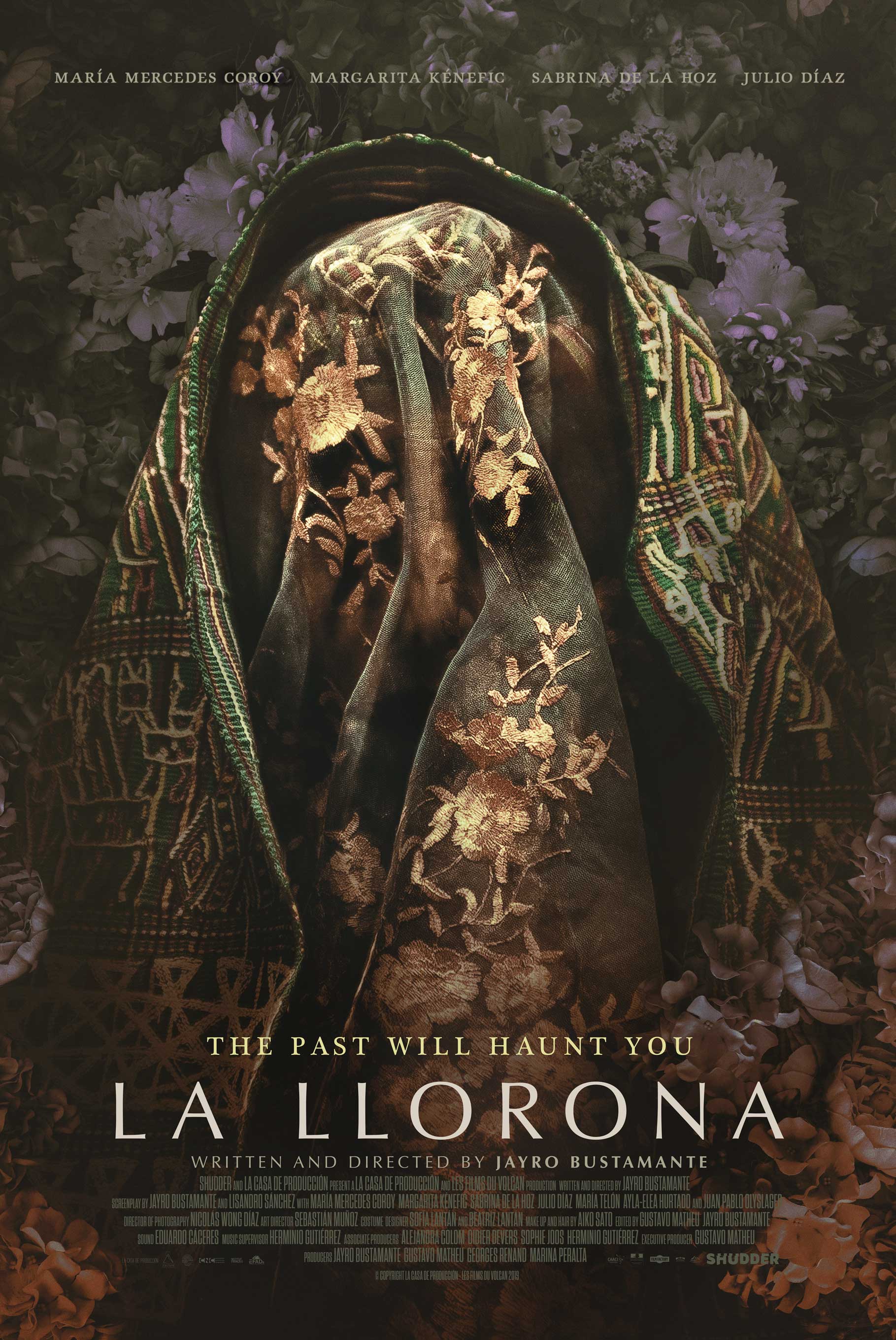
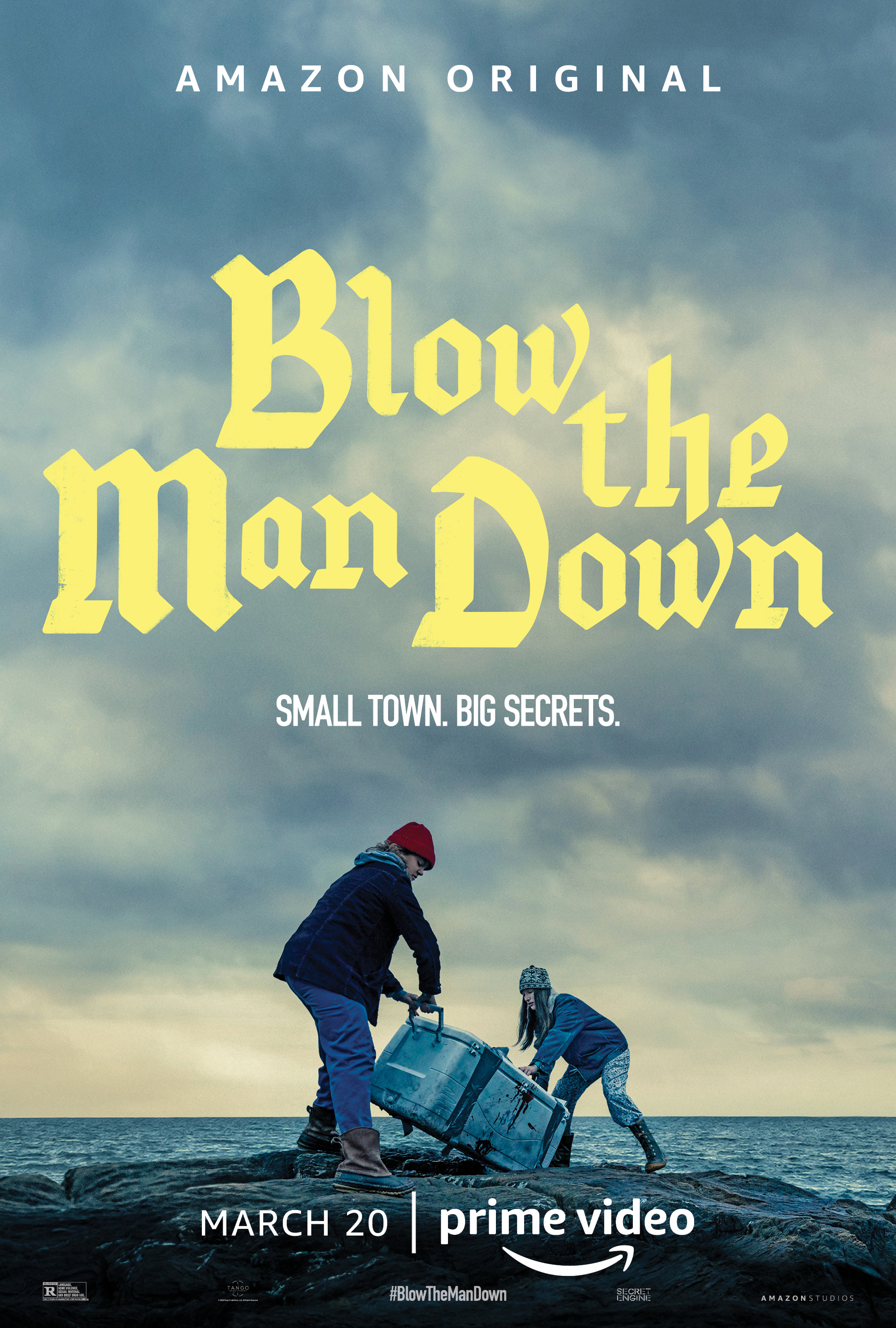
3. La Llorona (Shudder) and 4. Blow the Man Down (Prime) (tied)

La Llorona is on the horror streaming service Shudder, but that might be misleading. It is about national memory and generational trauma. La Llorona is a harrowing, quiet drama about a well-off political family coming to terms with the fact that their patriarch may be a monster. Amidst all this is a reckoning with genocide and the arrival of a ghost. The story is told in beautiful long takes, many pulling out slowly from a central person delivering their story. Mesmerizing.

In Blow the Man Down, a small fishing town where everybody knows everybody is hit with murder. 

This has been compared with Fargo, which feels appropriate, but what I returned to were the small moments of empathy and connection – a sympathy note left in a jacket pocket, a voicemail saved on a phone, a memory from high school spent together. What haunts me is how childhood friendships are broken by horrific acts in a way we will never see or understand – the way someone you grew up with suddenly is different than you thought they were and the people you thought would be a part of your home forever are gone from you. 

That makes it sound bleaker than it is; it’s a fun movie, with great performances and a soundtrack that alternates between a brisk score and a capella working songs. But amidst all this, there is longing and there is loss of innocence. 

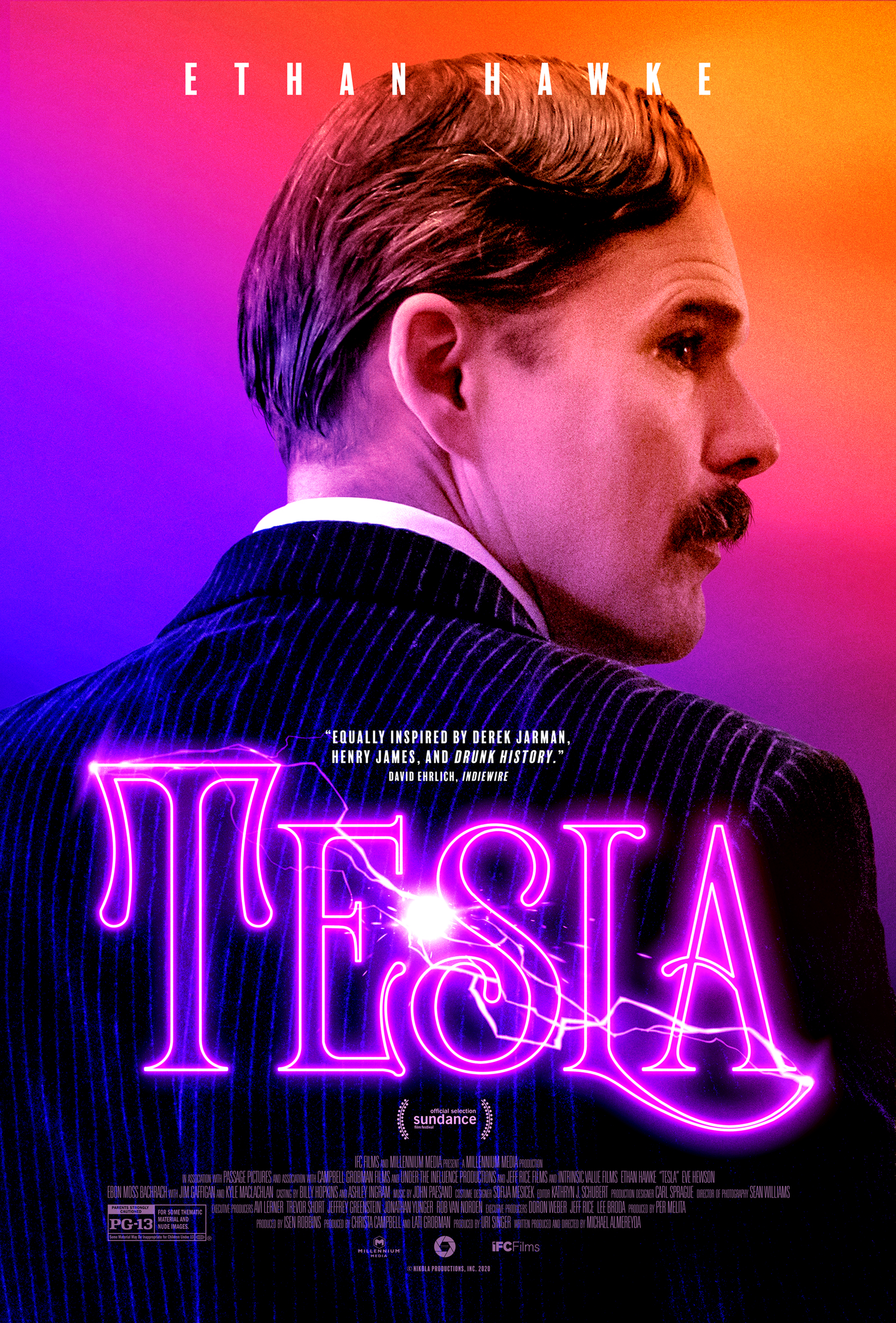
5. Tesla (Hulu)

Michael Almereyda’s weird postmodern biopic was one I wrestled with and was rewarded with immensely literary allusions and emotional integrity that many viewers interpreted as flippant at first glance. Watching this film and reading about it afterward gave me the same feeling as an invigorating literature class. If that sounds like something you’d like, you should check it out! If not, maybe don’t. More on it here: https://narratedworld.wordpress.com/2020/08/23/tesla-2020-review-invention-and-reinvention/ 

Honorable mentions: Bad Hair (audacious horror-comedy from Justin Simien set in 1980s-era MTV culture, with incredibly fun – and gross – results; Hulu); Shirley (Josephine Decker directs a movie about manipulative relationships – it’s great and made me feel ill; Hulu); Martin Eden (this surely would have been more palatable to me if I had known anything about Jack London’s novel – read up a bit first! – but it’s worth it for the mix of historical footage and contemporary film and Luca Marinelli’s undeniable screen presence; KinoNow or your local indie theater site)

5 Favorite Movies of 2020

“As I Am,” Validation in Metal, and Composing for Catharsis

Today’s interview is with my brother, Sam. A musician, he talked to me about the process of composing as a way to address unresolved emotions, the way other people’s songs can provide validation and catharsis, and the variety of styles found in metal. You can hear new songs and remixes from him every other Sunday on YouTube at his channel, Light MetaS.

This interview has been edited for length and clarity. S is Sam and CR is me (Carson).

CR: Is there a particular song that you have a strong memory with or is one of your favorite songs?

S: Yup, yup, yup. I haven’t really had the chance to share this with anybody because nobody else really knows Dream Theater very well, but I remember Dad listened to the first song from that – I think it was the one that you heard, the one with the scary cover on it? – the first song on that album …

Dad (plays) a lot of music where I’m like, “Oh, that’s good, that’s good, that sounds pretty good,” but occasionally there’s something where I’ll hear it and he’ll go onto the next thing, but I’ll stop and I’ll be like, “I like that. That resonated with me.” That was one band that I felt like that …

So, he gave me that album and I went on a trip (with my girlfriend at the time), and it was really bad. (laughs) We had a miserable time together … I had such a guilt complex towards everything that I did, and I couldn’t conceptualize – it’s too hard to change someone else who you feel like might be being the problem, so it’s much easier to look at yourself and be like … “I can’t change them, but I don’t want to lose this relationship, so I must just try to change whatever I can about myself in order to make this better.” Right? So, I had a really, really hard time with that …

I remember going out and sitting outside or something and listening to the first song on that record … “As I Am,” and the chorus on that is so powerful. And the second verse – it resonated with me so bad. It was one of those things where it’s like, “I don’t have any problems in my relationship! There’s nothing wrong!” and then this song says something, and something comes out of you … “I can’t deny it anymore; this speaks exactly to the way that I feel” …

I remember hearing this verse and … it just spoke to me. It was so simple. It was like, “still going uphill, swimming against the current … feels like I’m stuck swimming a sea of mediocrity.” And then the chorus is just like, “I won’t change to fit your plan/Take me as I am” … I got this really, really, really humongous rush of anger and validation … That song has resonated with me so much, that it was pretty much the best thing about maybe the entire trip, that album and that song …

CR: When you listen to that album now, do you think about that trip?

S: Oh yeah. That’s pretty much the only thing that I can think of when I hear that. It’s really disturbing how much … every song on that album, except the last song, I think, really spoke to my condition at the time …

I remember laying in my bed, and I turned on the album, and then the lyrics start up … “lying in my bed, staring into darkness,” talking about how far he is from this person who he loves, and I was like, “This is disturbing how accurate this is.” (laughs) …

Chronologically, the album that came after that, I listened to after we broke up, and it had a lot of songs that spoke to me. There’s a song called “Panic Attack,” and you can imagine that that spoke to me after I had some problems with anxiety. It’s just kind of disturbing how accurate sometimes, lyrically, some songs can be.

But that album especially, I really really felt like … I wasn’t totally alone anymore … It was pretty much the only thing that I had at that time that really illuminated the way that I was actually feeling and treated it as if it wasn’t my fault. So that was really powerful.

CR: Have you been listening to any other Dream Theater recently, or what are you listening to now?

S: I was listening to them today! I think my two favorite bands right now are them and Kissin’ Dynamite, for other reasons, but Dream Theater – I don’t know their catalogue very well, because I typically listen to one album repeatedly and then I move on to the next one, so right now I’m listening to an album by them called A Dramatic Turn of Events, and it’s ridiculously good. It’s so epic. I absolutely love them …

It’s a perfect marriage of metal and symphony, because the guitars and percussion sounds are so fast and really detailed, but lyrically, and the lead melodies (are) very simple and easy to remember, and it’s very slow and just beautiful, and I absolutely love it. I think if I’m being serious, they’re probably my favorite band, but Kissin’ Dynamite is up there too, in terms (of) enjoyability.

CR: Do you feel like listening to those bands affects how you write music or think about constructing arrangements?

S: Yep! Absolutely! I feel like it’s like my homework sometimes because I learn things. Music to me is just a bunch of just replicating – it’s basically making a musical collage of all the things you’ve learned from listening to music, so it’s educational to me … I think Dream Theater uses particular chords – actually, chords that I hear a lot in Eastern music, I think, more often, but Dream Theater definitely uses chords that I really like a lot more than a lot of other bands.

I think you don’t see that a lot with metal because they focus a lot on the – I don’t know what it’s called, but the devil’s chords, or whatever – there’s not a lot of movement. Rhythmically, there might be a lot; in progressive bands, there’s a lot of time signatures and weird stuff going on, but a lot of the time, there’s not a lot of movement in the actual sound of the song or thematically. It doesn’t feel as dynamic, and I think that that is not the case with Dream Theater … Everything sounds very big and theatrical …

CR: Do you know what it was about them when you first heard them that you were like, “Oh, this is cool!”

S: I think it was just the fact that it really sounded like the guy was legitimately pissed off when he was singing. (laughs) Because a lot of the stuff that Dad listens to, he’s like, “Oh yeah, this is cool,” but it’s music that’s made to entertain and bring a good time, but when I heard Dream Theater, I was like, “Somebody’s going through something here. This feels very real to me.”

I don’t know about you, but … I can’t communicate things that displease me in a very elegant way because I don’t think that it’s morally or ethically right for me to be angry at anything. So when I hear somebody articulate my pain in a way that makes sense and is really powerful, then I’m like, “OK. That’s what I’m feeling.” And I’m validated by that.

I think that it has to do with both of those things: the fact that it’s coming from a very real place and the fact that it’s connected to something that I don’t think I’ve been able to connect with for the majority of my life.

CR: That makes me think about – I think a lot of people find catharsis in music and different bands, their voices.

S: Yeah, that seemed like a foreign concept to me for a while. But that’s kind of the whole shtick with a lot of harder rock bands, especially Metallica. If you want to talk about catharsis, that was Lars (Ulrich, drummer for Metallica)’s whole thing, when he was sitting in the room eating a sandwich (in Metallica: Some Kind of Monster), he was like, “(20) years of hatred – sold a hundred million records.” His whole point was that in catharsis, they were able to capitalize on their own pain …

It’s huge. A huge part of music. And I think that’s one of the reasons why I don’t find that I compose that often in major keys is because I don’t find the same healing capacity in that as often, because I’m not trying to fix – there’s no work to be done, necessarily … You can’t heal an emotion that’s already happy. But obviously you can create a lot of joy using major keys as well …

A prog rock song Sam composed, with artwork by me.

CR: If I’m understanding what you said correctly, it sounds like you use composing music to work through things or heal things, is that right?

S: Sometimes! It’s kind of like a chicken and the egg sort of thing. Originally, I just did it because it was fun, but then sometimes I use it as a method of catharsis because sometimes I just don’t know what to do with certain emotions because I just can’t seem to overcome things, and so sometimes I’ll use music as a resource … and then when you compose something and if it turns out good, then you’re like, “That was fun!” (laughs) And then it turns into a fun thing again, so it goes back and forth between the two. It just kind of all depends on the circumstances that you’re going through in your real life …

CR: How has the way you listen to music or your taste in music changed since you were a kid until now?

S: Seeing music as a potential for healing I think is huge. I think that was something that I didn’t really understand until maybe 2 or 3 years ago … And then not just using it to make music that sounds good to you, but using it as a tool to express the way that real-life things that are happening … That’s the same reason why I feel like music resonates with me, is because it’s something that’s legitimately bothering the person who’s singing or something that really means something to them. It’s not just a bunch of poppy nonsense or whatever. But pop music can do that too, so I don’t want to discriminate.

CR: As a composer and arranger, do you feel like you can listen to music and not analyze it, or are you always analyzing it?

S: If I’m not paying attention to it, I feel like. (laughs) But I think I have a very fixated perspective on how music should sound. I think if I’m listening to something like jazz, I’m less so, or rap or something, because I don’t really know the territory very well, but if I’m listening to something that has strings or something that has guitars in it … I get really weird. I’m like, “OK, this chord should come next. If it doesn’t, I’m gonna be disappointed.”

CR: (laughs)

S: I’m not kidding! And one of the things that’s weird is that when I listen to Dream Theater, a lot of the time, I’ll be like, “This should come next,” and it does, you know? It’s very weird … “OK, they moved from that to this, which means this chord should be next; that would sound really good,” and they do that.

A lot of the time, I feel like there’s some missed opportunities. I think that the problem oftentimes is that composers are sort of only limited to their perspective. So when you have multiple songwriters, I think that that can help a lot, but I think when you only have one songwriter, that’s sort of where you get the pothole where oftentimes the music can get kind of repetitive, but I don’t know. It really depends on who you’re listening to.

CR: What do you like about Kissin’ Dynamite?

S: I love them because their mixing is very, very good on some of their albums; there’s two in particular that – it’s mixed exceptionally well. They also use kind of more melodic chord changes, and I think a lot to do has to do with the fact that they’re a German band, so they have a different kind of fundamental understanding of the way metal should sound, and so it’s a little bit more melodic. The vocal melodies are always really good. The lyrics are sometimes so stupid that they’re awesome. It’s just fun, and occasionally, you’ll hear a lyric and be like, “That was good,” and it makes it that much more exciting when (the lyrics are) actually good because it’s so rare. So it’s just – everything about it is great.

I just love Kissin’ Dynamite. The only thing I don’t like – I feel like they sell themselves short a little bit. The singer said that he doesn’t want the guitar solos to go on very long, he cuts them short, and I feel like they only really write 3 or 4 minute songs, and that can get kind of frustrating, because I really feel like if they did a 5 or 6 minute song, it would be absolutely exceptional. But they never really go that far. It’s just always, verse, chorus, verse, chorus, solo, chorus, end. That’s always how it is. Frustrating. But they’re great.

CR: One question I’ve been meaning to ask people is, do you think that what you listen to affects who you are as a person, and do you think who you are affects what you choose to listen to?

S: Yeah! I mean, it really depends on your mood and the people that you’re around and what you’re suppressing and what you’re allowing yourself to experience, and what brings you relief in that moment, what brings you joy.

Being someone who grew up and was largely influenced by video game music, I think that – a lot of people look at it as movie soundtracks and traditional music, and … (for) movie soundtracks … not only is this being a storyline portrayed in the movie, but there’s a rising and falling storyline in the music as well that comes and goes, and with video game music, it’s not really composed in that way. You have pieces that are (reserved) for particular parts of the game.

I think that tension is something that I’ve become predisposed to in music that I really enjoy, and I think that you don’t really get a sense of tension in traditional – you know, music that most people listen to. When you can get that in a rocking song or something that’s really catchy but also has a sense of tension and sort of a storyline, emotionally, to it, I think that’s what really resonates with me, and I think part of that has to do with the fact that I didn’t grow up with the type of music that most people did.

A remix album Sam released to celebrate the Kirby games’ 25th anniversary.

When you have those preexisting expectations, it drives you to seek out certain types of music, and then when that music becomes the new normal, it still affects everything else, so it’s sort of like connect-the-dots. You’re gonna end up on a certain path depending on your own experiences anyway. Even if you start listening to more popular music, you still got there because of your story of the music you listened to in the past.

CR: I was just wondering if you could define what you are talking about when you say “tension”?

S: Tension … You can’t have a storyline that doesn’t have conflict in it. You can, but if you have no polarization to compare that to – you can’t have black without white; you can’t have positive without negative. It’s sort of the same thing with tension.

I like an emotional friction in my music that comes and goes, and that’s why albums or genres or artists that may compose in one genre but that compose with the sense of only having satanic tones or happy tones or sad tones gets exhausting sometimes.

CR: That’s cool.

S: All right.

“As I Am,” Validation in Metal, and Composing for Catharsis

Reflections on Proverbs of Ashes

Reading Layton E. Williams’ Holy Disunity for a Bible study, she mentioned the book Proverbs of Ashes by Rita Nakashima Brock and Rebecca Ann Parker, a criticism of redemptive suffering and sanctioned violence in Christianity. Intrigued, I read it immediately.

It was startling to me to read a perspective that said what I felt so deeply but found hard to express. A couple years ago, I heard the pastor Nadia Bolz-Weber say on a podcast that the idea that God sacrificed His only son to save humanity was abusive. This fractured my theology and haunted me.

Wasn’t the sacrifice of Jesus the whole point of our religion? What were we left with if that was true (and it certainly felt true)? And a pastor was saying this, of all people? How could she say that and also say she was a Christian?

Proverbs of Ashes agrees that the idea of Jesus as sacrifice is deeply harmful. It can bring pastors to teach those who live in abusive relationships that they should stay and suffer as Jesus did on the cross. It can teach people to believe that it is good to ignore their own hopes and joys for the sake of others.

But, much like Bolz-Weber, the people saying this earth-shaking criticism are people of deep faith. Rita Nakashima Brock is a Senior Vice President for Moral Injury Programs at Volunteers of America and a Commissioned Minister in the Christian Church (Disciples of Christ). Rebecca Ann Parker is the Emerita Professor of Theology at Starr King School for the Ministry at the Graduate Theological Union and an ordained United Methodist minister in dual fellowship with the Unitarian Universalist Association.

A joint memoir, the two authors share their personal stories and the way their experiences have led them to wrestle with their theologies. Their beautiful, lyrical writing does not shy away from the trauma of violence, racism, and abuse.

But above all, I found this to be a book written in love. It is not just a book about reducing harm and rejecting violence, although it is that. It is a book about moving toward community, choosing hope, and realizing what God is beyond the church’s teachings.

Time and time again, the two authors return to the idea of connection with others above self-sacrifice as the place where love lies.

On what drives her criticism of the theology of redemptive suffering, Brock writes, “I realized long after I was a theologian that my interest in religion and my focus on the violence done to Jesus are grounded in my childhood experiences of racism. I have concluded that the Christian theological tradition has interpreted Jesus’ life in ways that reinforced trauma. I was isolated by the traumatic events of my childhood. The tradition has isolated Jesus as a singular savior, alone in his private relationship with God…I knew, from my own experience, that there is no grace in such isolation…My theological obsession became how to show that vulnerability, mutuality, and openness demonstrate love, that these bonds of love and care reveal the presence of God.” (p. 53)

Violence and trauma are worth wrestling with when we have hope that drives us. Brock and Parker do this admirably. In laying bare the reality of abuse and the way that the church’s teachings have sanctioned that abuse, they never lose sight of why they must question those teachings: to run toward a new way of community, love, self-worth, and spirituality that protects and gives life.  

In the church she pastored, Parker participated in a community that lived out a new perspective on Christian theology:

“What I was learning at the church was in sharp contrast to the theology of self-sacrificing love I wrestled with. It wasn’t the willingness to bear pain, or carry the burdens of others that transformed life in the places where life had been harmed by violence. It was strong relationships among human beings who offered their presence to one another.

“I began to understand that violence is resisted by those who reverence the sacred presence of human beings and themselves embody such presence in the world…Loving acts emerge from the grace we have come to know in the presence of one another. It is by being faithful to the power of presence that we learn to love.” (p. 110)

In Proverbs of Ashes, Brock and Parker understand that wrestling with difficult teachings is invaluable and that imagining what we want to create in their stead is what replenishes our spirits. It is books like this that can give us the energy to keep wrestling, witnessing, hoping, and living into a new theology.

Brock, R. N., and R. A. Parker. Proverbs of Ashes: Violence, Redemptive Suffering, and the Search for What Saves Us. Boston, MA: Beacon Press, 2001.

Reflections on Proverbs of Ashes